
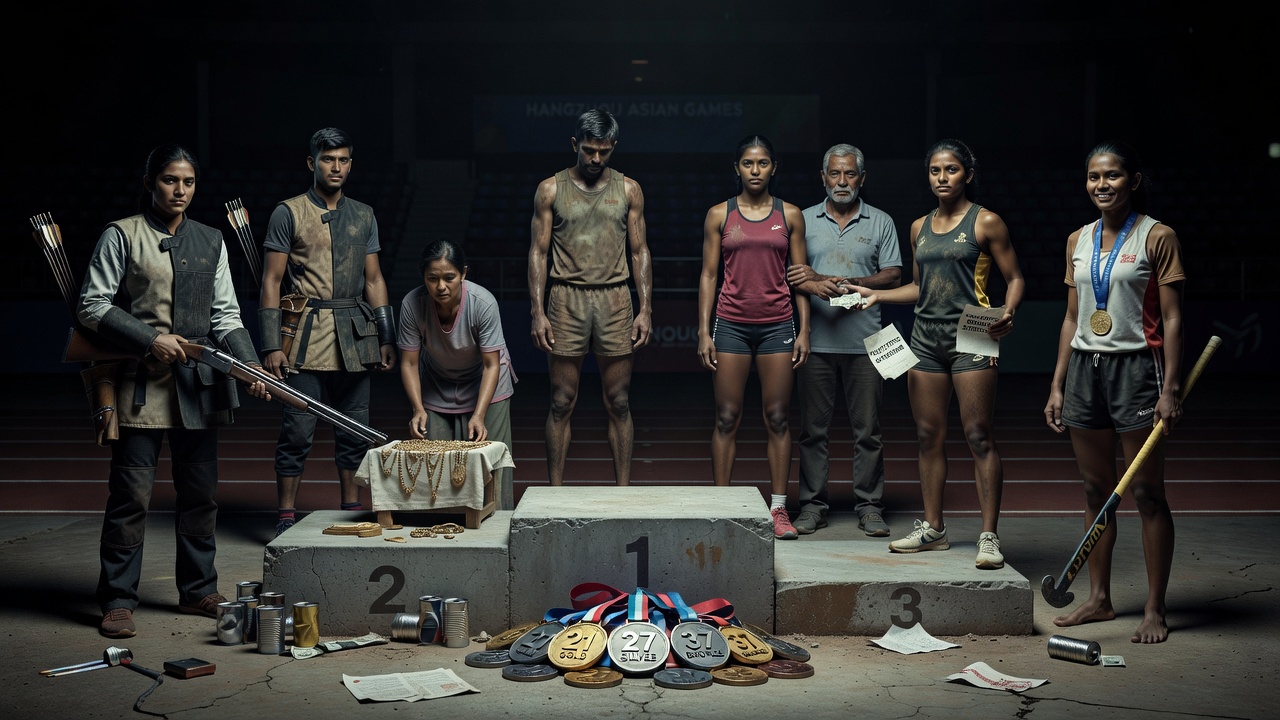
Eighty-five medals from Japan should have been the headline story across India for weeks. Instead, the achievements of athletes in trap shooting, kabaddi, archery and hockey surfaced briefly before cricket reclaimed the national conversation. That pattern, repeated after almost every multi-sport event, says as much about India's sporting economy as it does about its culture.
A medal haul built on scarcity, not infrastructure
The stories behind this year's 21 gold, 27 silver and 37 bronze medals share a common thread: athletes succeeding despite their circumstances rather than because of institutional support. Neeru Dhanda trained with a borrowed shotgun and tin cans before winning gold in trap shooting. Sahil Jadhav competed with borrowed arrows until his mother sold jewellery to fund his equipment. Aslam Inamdar worked cleaning jobs to afford evening training sessions in kabaddi. These are not isolated hardship narratives; they describe a system where talent identification and financial backing remain inconsistent outside cricket, which absorbs the overwhelming share of sponsorship, media coverage and broadcast revenue in Indian sport.
This imbalance has commercial logic. Cricket's audience size makes it the default investment for advertisers, broadcasters and increasingly for the betting and fantasy-sports operators who have built businesses around India's cricket calendar. Other sports, lacking comparable viewership, struggle to attract the sponsorship that would fund training facilities, equipment and travel. The result is athletes who reach international podiums largely through personal sacrifice and family debt, as seen in Vithya Ramraj's father borrowing money to support her athletics career.
Visibility as a market signal, not just sentiment
Siddharth Pandey's observation that "you cannot be what you cannot see" is also a statement about market incentives. When regional communities, particularly from under-covered regions like the north-east that produced several of India's hockey stars, watch athletes succeed, participation and grassroots investment tend to follow. But visibility depends on media and advertising economics that currently favour cricket almost exclusively. Vidya Pillai's experience after winning a snooker world championship, feeling unacknowledged despite a genuinely difficult path to the title, illustrates how recognition gaps persist even after success, not just before it.
For sponsors, broadcasters and the broader sports-entertainment industry, including platforms that monetise sporting interest through advertising or wagering products, this represents an underexplored market. Diversifying commercial attention beyond cricket could widen the fan base for multiple sports and create new advertising inventory, though any growth in sports-adjacent betting markets would need to be matched with proportionate consumer-protection measures, given how quickly new sports can attract speculative wagering once visibility increases.
What sustained support would require
Converting Asian Games enthusiasm into lasting change needs more than social-media attention during the event itself. It requires consistent funding for training infrastructure, transparent athlete welfare schemes, and sponsorship models that do not depend entirely on medal wins to justify investment. Ancy Sojan's long jump silver, achieved while managing a polycystic ovarian syndrome diagnosis, and Lalremsiami Hmarzote's journey from a barefoot childhood in Mizoram to hockey gold, show what is possible when talent intersects with opportunity, however limited. The question India now faces is whether this edition's medal count becomes a policy inflection point or another cycle of brief recognition followed by a return to cricket's dominance.