
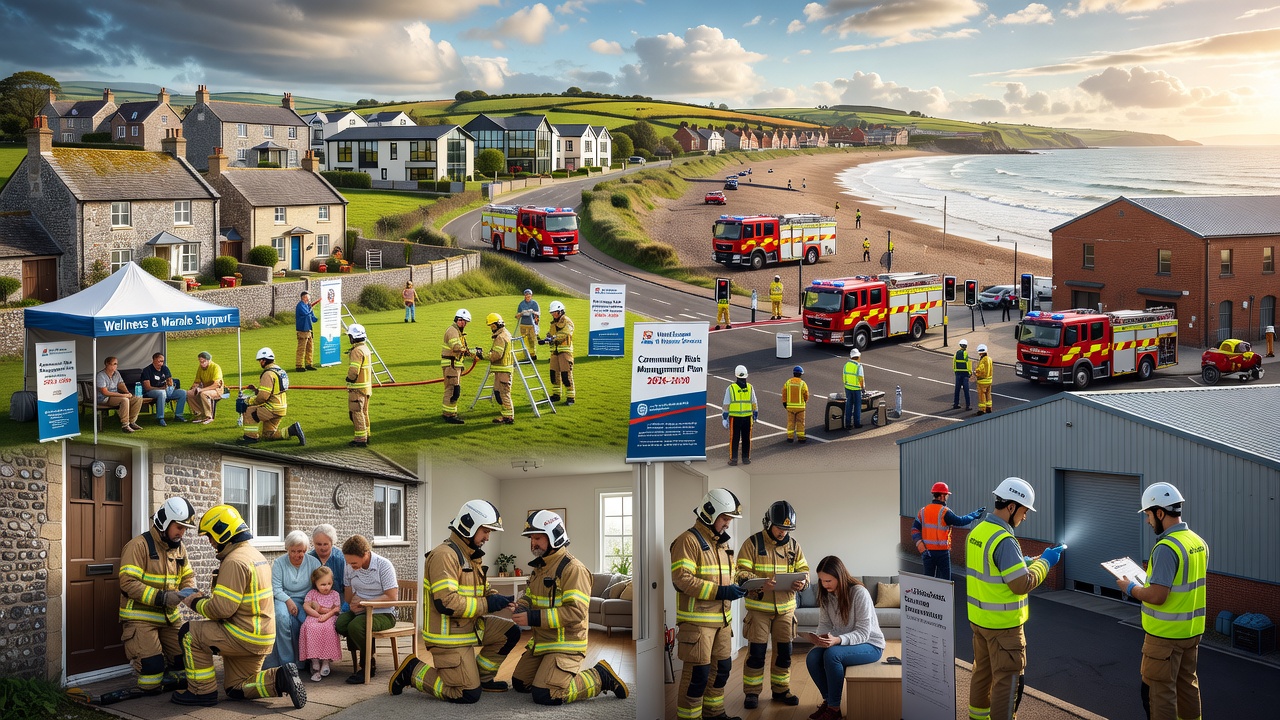
West Sussex Fire & Rescue Service has published its Community Risk Management Plan for 2026 to 2030, a document that will shape how the service allocates resources, trains staff and responds to emergencies across the county for the next five years. The plan is built around prevention, protection and response, with an explicit commitment to supporting the workforce that delivers those services on the ground.
What a Community Risk Management Plan actually does
Every fire and rescue service in England is required to produce a CRMP, a strategic document that translates local risk data into operational priorities. Rather than treating every community the same, the plan is meant to reflect the specific hazards present in West Sussex, whether that relates to housing stock, road networks, rural access, flooding, or commercial and industrial sites. The result is a framework that guides where fire engines are stationed, how crews are trained, and which prevention campaigns receive attention, rather than a generic national template applied without local judgment.
Balancing prevention, protection and response
The three-part structure - preventing emergencies, protecting people and property, and responding effectively when incidents happen - reflects a long-standing shift in fire service thinking away from reactive firefighting alone and toward reducing the likelihood of harm in the first place. Prevention work typically includes home safety visits and education campaigns aimed at reducing accidental fires. Protection covers fire safety enforcement in buildings, a function that has received renewed scrutiny nationally following high-profile building safety failures in recent years. Response remains the visible, resource-intensive core of the service, and the plan's commitment to making the best use of resources signals an awareness that budgets and staffing cannot expand indefinitely even as demand and risk evolve.
Why staff welfare features alongside operational goals
Placing staff support as a standalone priority, rather than treating it as a background assumption, points to pressures familiar across emergency services: retention difficulties, the physical and psychological toll of frontline work, and the need to maintain morale while services are asked to do more with constrained funding. A plan that only measured incident response times without addressing the people delivering that response would risk being operationally sound but practically fragile.
Public consultation and accountability
The service states that residents, staff and partner organisations were consulted in shaping the plan, a step that matters because community risk plans are only as credible as the local evidence behind them. Consultation processes allow a fire authority to test whether its assumptions about risk match lived experience, and they create a degree of public accountability for decisions about where engines, crews and prevention work are concentrated. For residents, the practical value of the CRMP lies less in its structure than in what it means locally: how quickly help can be expected to arrive, which buildings face closer safety inspection, and how prevention advice reaches the households most likely to need it.
- Covers the period 2026 to 2030
- Structured around prevention, protection and response
- Includes a dedicated focus on staff support
- Developed following consultation with residents, staff and partners
- Aims to guide resource allocation and service efficiency