
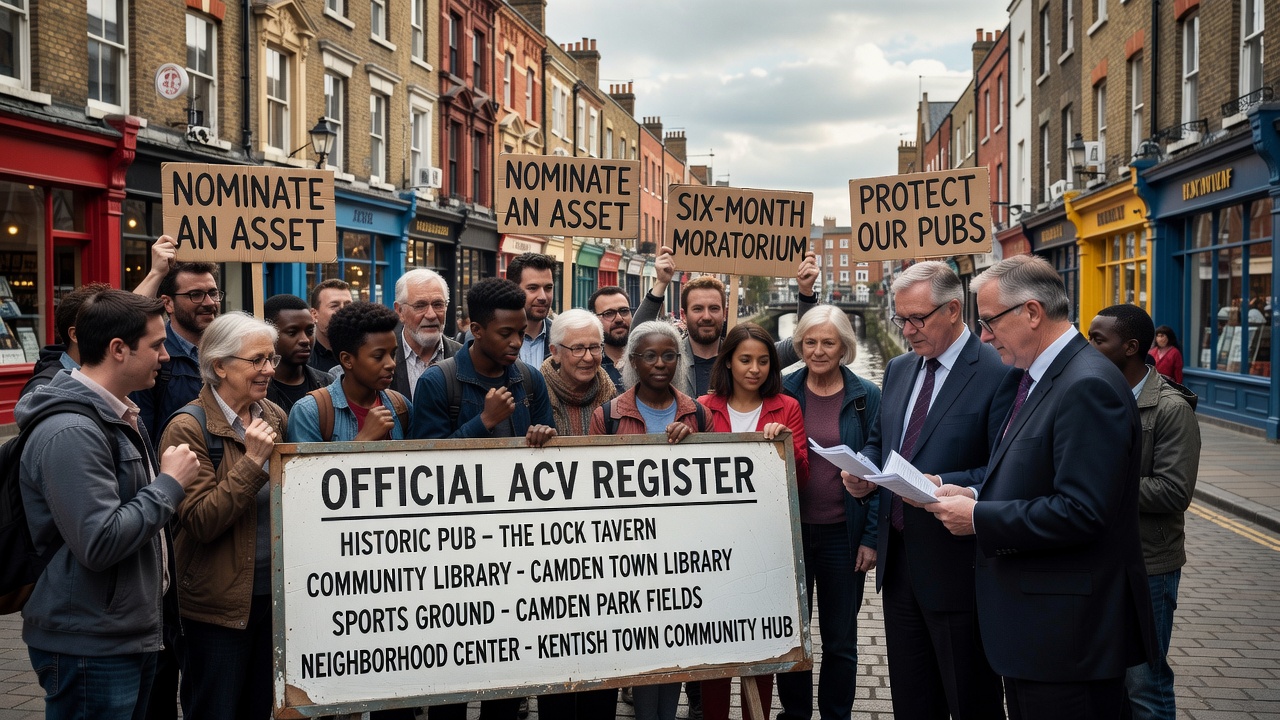
A building's fate rarely rests solely with its owner once it becomes a hub for local life. Under the Localism Act 2011, councils across England - Camden included - must maintain a public list of Assets of Community Value (ACV), giving residents a formal mechanism to flag land or buildings that matter to the social fabric of their neighbourhood. The scheme does not block a sale, but it buys organised community groups time, and that time can determine whether a library, pub, sports ground or community centre survives in local hands or passes quietly into private redevelopment.
What Listing Actually Does - and Doesn't - Change
Designation as an ACV is not a form of protection against sale or demolition in the way many assume. An owner can still sell to whomever they choose, at whatever price the market sets, and can still apply for planning permission to change the use of the site. What listing does provide is procedural: once an ACV is to be sold, the council must notify the community, triggering a window in which an eligible group can declare interest. If they do, a six-month moratorium follows, giving that group a chance to assemble financing and submit a competing bid. Nothing obliges the owner to accept it.
Who Can Nominate, and on What Grounds
Not every group can trigger this process. Eligibility is deliberately narrow, intended to filter out speculative or unrepresentative claims. Qualifying bodies include unincorporated associations with at least 21 local electors, neighbourhood forums, charities, community interest companies, and non-profit-distributing companies limited by guarantee. The property itself must meet a social-value test, past or present use (or realistic future use within five years) must further the social wellbeing or interests of the local community, whether through cultural, recreational or sporting activity. Residential properties are excluded outright, regardless of community sentiment attached to them.
- Listing lasts five years, after which a fresh nomination can be made.
- Camden's Chief Planning Officer decides nominations within eight weeks.
- Owners can request a review, and ultimately appeal to the First Tier Tribunal.
- Successful appeals allow owners to claim reasonable legal costs.
Exemptions Narrow the Right to Bid Considerably
The moratorium is not universal. The Act carves out several categories of disposal where the community right to bid simply does not apply - gifts, transfers within a family or corporate group, sales arising from wills or legal proceedings, disposals of a going-concern business, and leases under 25 years, among others. These exemptions matter because they shape expectations: a listing on the ACV register signals recognition of community value, but it offers no guarantee that a moratorium will ever be available when a sale actually happens. Once a protected period of 18 months has elapsed following a disposal, a fresh moratorium cannot be triggered again for that cycle.
A Procedural Safeguard, Not a Veto
The practical value of the ACV system lies in the breathing space it creates, not in any power to stop a sale outright. For councils, it means administering nominations, registering land charges, and handling appeals within statutory timeframes. For community groups, it means the clock starts the moment an owner signals intent to sell, so organising finance and support in advance, rather than scrambling afterward, determines whether a bid is realistic. For property owners, the system adds a notification obligation and a waiting period, but preserves their ultimate freedom to choose a buyer and a price. Understood this way, the Localism Act's community right to bid functions less as a shield and more as a structured opportunity - one that depends entirely on local groups being ready to act when it counts.