
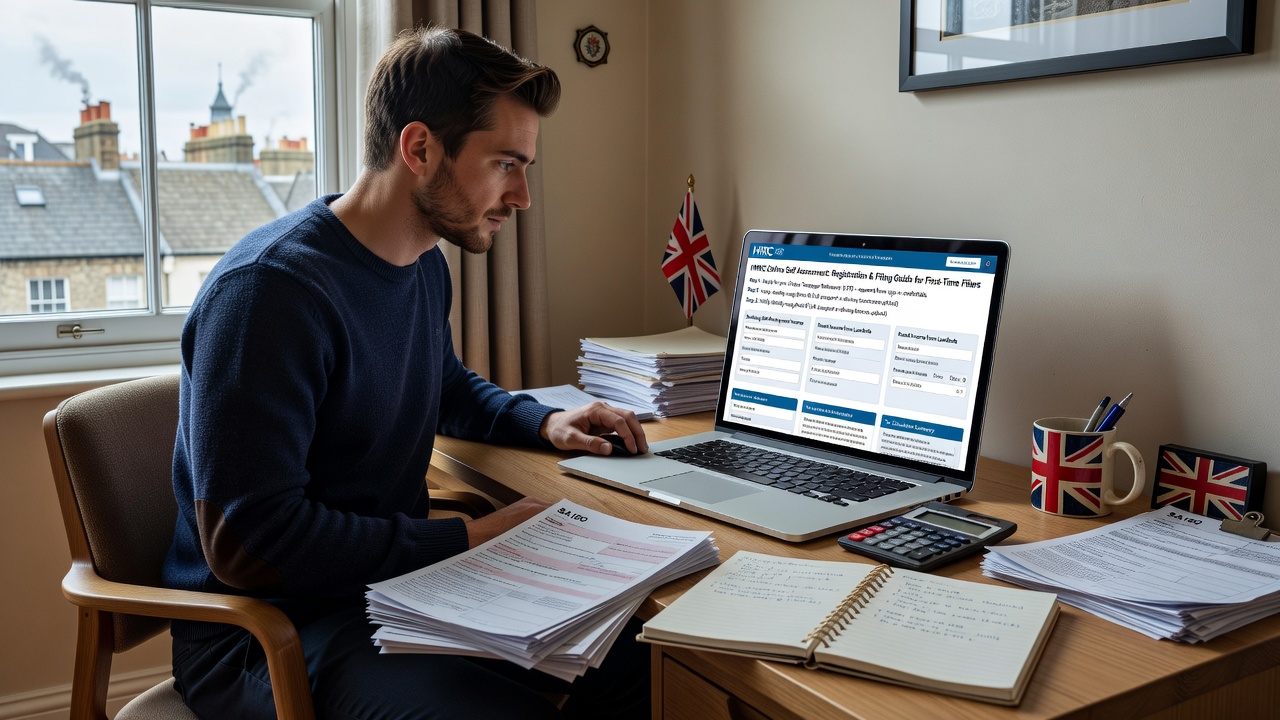
Millions of people in the UK who earn income outside standard employment - the self-employed, landlords, and others with taxable income to declare - must file a Self Assessment tax return each year. HMRC's online filing service is the main route for doing this, but eligibility, registration status, and identity verification requirements catch out a significant number of users every filing season.
Who the service is for, and who it excludes
The online service covers two broad groups: people who are self-employed, and those who are not self-employed but still owe a return, commonly landlords declaring rental income. Returns can be filed any time from 6 April following the end of the relevant tax year, and missing the deadline triggers an automatic penalty regardless of whether tax is actually owed.
Not everyone qualifies to use the digital channel. HMRC explicitly excludes several categories from online filing:
- Partnerships, which require separate reporting arrangements
- Individuals who lived abroad as non-residents during the tax year
- Taxpayers reporting multiple chargeable event gains, such as those arising from certain life insurance policies
- People receiving trust income, Lloyd's underwriters, and religious ministers
Anyone in these categories must instead use commercial software or paper forms. Those still filing an SA100 return for the 2020 to 2021 tax year or earlier need to source forms from the National Archives, since HMRC's live system does not retain older return formats.
Registration comes before filing
A recurring source of delay is assuming the online portal is available to anyone with a tax obligation. It is not. First-time filers must register for Self Assessment before they can submit anything, and this registration step is entirely separate from creating sign-in credentials. People who registered previously but have let their account lapse may need to reactivate it rather than starting fresh - skipping this step is one of the most common reasons a return gets held up during processing.
This structural separation between registration and filing reflects how HMRC manages taxpayer records: a Unique Taxpayer Reference (UTR) number is issued at registration and becomes the anchor for every subsequent interaction, from filing to checking outstanding liabilities.
Identity checks and account flexibility
Because Self Assessment accounts expose sensitive financial data - income, liabilities, past returns - HMRC applies identity verification at sign-in for some users, typically requiring photo identification such as a passport or driving licence. This mirrors a broader shift across UK public and financial services toward stronger digital identity assurance, driven by rising concerns about account takeover and tax-related fraud.
Once inside the system, users are not required to complete a return in a single session. Entries can be saved and resumed, which matters for anyone assembling figures from multiple sources, such as rental accounts or self-employment records, over several weeks. The same account also gives access to past returns, current tax calculations, and the option to switch to paperless notifications, reducing dependence on postal correspondence.
Why the distinctions matter
The exclusions and registration requirements are not bureaucratic friction for its own sake. Partnerships and trust income involve multiple parties or beneficiaries whose tax positions are interdependent, which the standard online form cannot adequately capture. Non-residents and Lloyd's underwriters sit under different tax rules altogether. Treating these cases through a generic digital form would risk misreporting and downstream compliance errors - for both the taxpayer and HMRC.
For anyone uncertain whether they fall inside or outside the online system's scope, checking eligibility before the filing window closes avoids the more costly scenario: discovering late that a paper form or commercial software was required all along.