
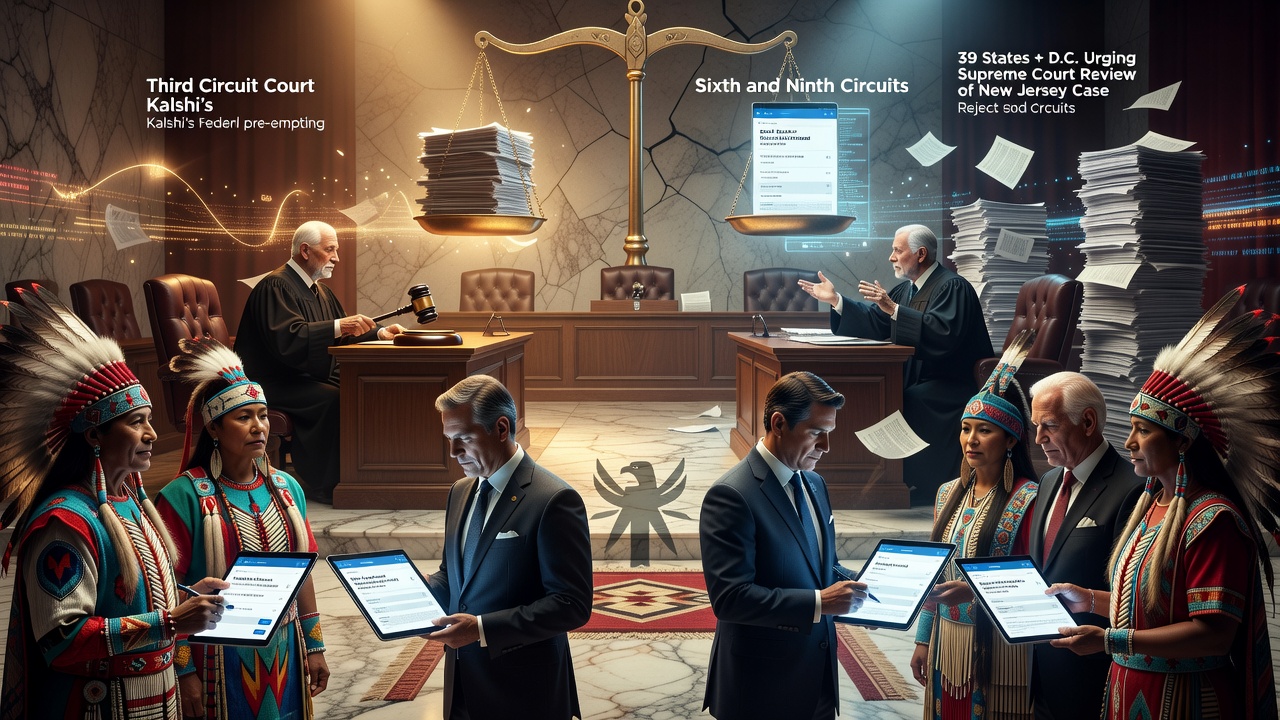
Four Native American tribes have struck partnerships with Kalshi to launch prediction-market apps, a move that splits tribal gaming interests just as courts and state regulators intensify scrutiny of the sector. The announcements landed alongside a Coinbase settlement with Michigan regulators and a 39-state push for Supreme Court review of a New Jersey ruling favoring Kalshi - signs that prediction markets have become the most contested front in American gambling policy.
Tribes Break Ranks on Sovereignty Fight
The Alabama-Quassarte Tribal Town in Oklahoma, along with California's Greenville Rancheria, Kletsel Dehe Wintun Nation and Alturas Indian Rancheria, will each control their own customer-facing platforms under the new agreements, while Kalshi supplies trading infrastructure and liquidity. The arrangement mirrors a September deal with Louisiana's Tunica-Biloxi Tribe. For tribes without casino access, particularly those in remote locations, the economic logic is straightforward: prediction markets offer a revenue stream that bypasses the geographic and capital barriers that have long limited participation in traditional gaming.
That logic puts these tribes at odds with the Indian Gaming Association and other tribal nations fighting Kalshi in court. Those groups argue that sports-event contracts offered on tribal lands amount to unregulated Class III gaming under federal law - a position the Ninth Circuit endorsed in September. The Kletsel Dehe's involvement is notable given its prior opposition to a California sweepstakes-casino ban, suggesting a pattern among smaller tribes willing to diverge from established tribal gaming coalitions when new revenue models emerge.
Courts Remain the Real Battleground
Coinbase's agreement to halt new sports-related event contracts in Michigan by Oct. 10, in exchange for a regulatory truce while appeals proceed, follows a similar pattern set by Robinhood and Kalshi in other states. These settlements are tactical, not conclusive - they pause enforcement without resolving the underlying legal question of whether federal commodities law pre-empts state gambling statutes.
That question now sits before multiple appellate courts with conflicting outcomes. The Third Circuit has favored Kalshi's pre-emption argument, while the Sixth and Ninth Circuits have rejected broader versions of it. Thirty-nine states and Washington, D.C., along with separate filings from consumer-advocacy groups and gaming-industry associations, are asking the Supreme Court to resolve the split through review of the New Jersey case. Coinbase, meanwhile, has filed its own appeal in the Second Circuit over Connecticut's enforcement authority, repeating the core argument that the CFTC holds exclusive jurisdiction over these contracts.
- Conflicting circuit rulings have created legal uncertainty for operators and states alike
- Settlements with Michigan and other states pause enforcement without resolving pre-emption questions
- Consumer-protection groups have joined states in urging Supreme Court review, citing gambling-harm concerns
Oversight Expands Beyond the Courtroom
Sen. Richard Blumenthal's inquiry into VIP betting practices is widening to include DraftKings, Kalshi and Polymarket, building on an investigation that began with FanDuel's personalized outreach to high-value customers. Lawmakers say FanDuel has not adequately explained the safeguards around sending athlete-featuring videos to bettors identified as high spenders - a practice that raises familiar questions about how operators identify and court their most valuable, and potentially most vulnerable, customers. Kalshi says it does not factor customer wins or losses into its practices; Polymarket points to newly introduced responsible-trading measures.
Athlete endorsements add another layer to the conversation. Anthony Edwards' deal with PrizePicks and Ronald Acuña Jr.'s agreement with Kalshi mark expanding celebrity ties to betting-adjacent products, arriving days after Victor Wembanyama publicly declined similar sponsorships over concerns about promoting gambling to fans. The contrast underscores an unresolved tension in sports marketing: athlete-driven promotion reaches large audiences quickly, but it also invites questions about the normalization of wagering among younger or more impressionable viewers.
Market Pressures Beyond Prediction Markets
Macquarie's third-quarter preview points to a gaming sector under strain from several directions at once - higher interest rates, a stronger dollar, Brazil's online gambling ban, and competitive pressure from prediction markets themselves. The bank projects revenue and earnings declines for major Las Vegas and Macau operators, even as regional U.S. casinos, online sports betting and online casino revenue are expected to grow. That divergence suggests capital and consumer attention are shifting toward digital and regional products rather than traditional resort gaming.
Illinois' reinstated per-wager fee from FanDuel, following a state tax introduced in 2025, illustrates how operators pass new costs directly to bettors through transaction-level charges rather than absorbing them. Combined with Canada's Supreme Court skepticism toward Ontario's cross-border liquidity pooling proposal, the broader picture is one of regulators and courts across jurisdictions working to define where gambling activity can legally occur and who bears the cost of oversight.