
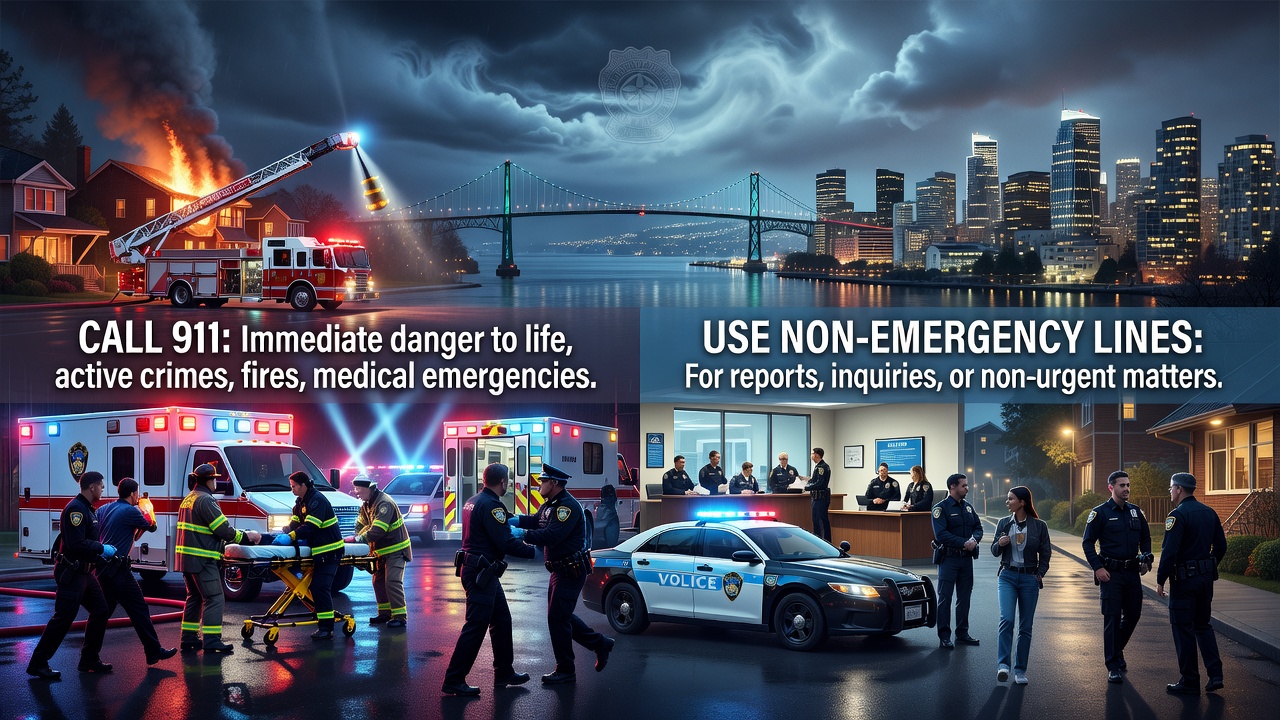
Knowing which number to dial in a crisis can matter as much as the response itself. The Vancouver Police Department (VPD) has outlined a clear division between emergency and non-emergency contact channels, aiming to reduce pressure on 911 dispatch while still ensuring urgent cases get immediate attention. The distinction affects everything from reporting a stolen bicycle to responding to a mental health crisis.
Two Numbers, Two Purposes
The VPD's guidance rests on a simple principle: 911 is reserved for incidents involving immediate danger to life, active crimes, fires, or medical emergencies. Everything else - a break-in discovered the next morning, a noisy party, lost property with no suspect - belongs on the non-emergency line, 604-717-3321. This separation exists because emergency call centres, operated in Vancouver's case by E-Comm 9-1-1, must prioritize calls where seconds matter. Mixing in lower-urgency reports slows response times for genuine emergencies.
Some low-risk reports, such as lost property under $25,000 or vandalism without a violent element, can now be filed online entirely, removing the need to tie up either phone line. This kind of triage reflects a broader trend across North American police services: digitizing routine reporting so human call-takers and dispatchers can focus on situations requiring judgment and rapid coordination.
Accessibility and Specialized Support
The VPD also highlights Text with 9-1-1 (T911), a service allowing people who are Deaf, deafened, hard-of-hearing, or speech-impaired to communicate with call centres via text during an emergency. Notably, a text sent to 911 without first registering the device or placing a voice call will not go through - a technical limitation users need to understand before an emergency arises, not during one.
Beyond accessibility, the department operates Victim Services staffed by civilian employees trained in crisis intervention, psychology, and social work. This reflects a recognition that not every call requiring a compassionate, trained response is also a call requiring an armed officer. Similarly, missing person reports can be filed with no waiting period, though the VPD stresses that any case involving a child, senior, vulnerable adult, or a person believed to be at risk of suicide should go straight to 911.
Routine Matters Handled Outside Policing
A significant portion of the VPD's public guidance addresses situations that look like police matters but are not. Minor traffic collisions with no injuries are directed to ICBC. Fraud under certain thresholds, with no financial loss, goes to the Canadian Anti-Fraud Centre. Marine pollution falls under the Canadian Coast Guard, while boat owners themselves bear responsibility for vessel safety and disposal costs under Transport Canada rules. Found property, including bicycles, is managed through a dedicated Property Office with defined holding periods and auction processes for unclaimed items.
- Parking violations: City bylaw enforcement during the day, VPD non-emergency line overnight
- Tenancy disputes: BC Residential Tenancy Branch
- Non-crisis mental health concerns: BC Crisis Line or the national suicide prevention line
- Anonymous crime tips: Crime Stoppers, independent of police lines
This allocation of responsibility across agencies is not bureaucratic friction for its own sake - it keeps policing resources focused on public safety while routing administrative, regulatory, or civil matters to the bodies equipped to handle them. For residents, the practical takeaway is straightforward: understanding which door to knock on saves time for everyone, including the person on the other end of the line during an actual emergency.