
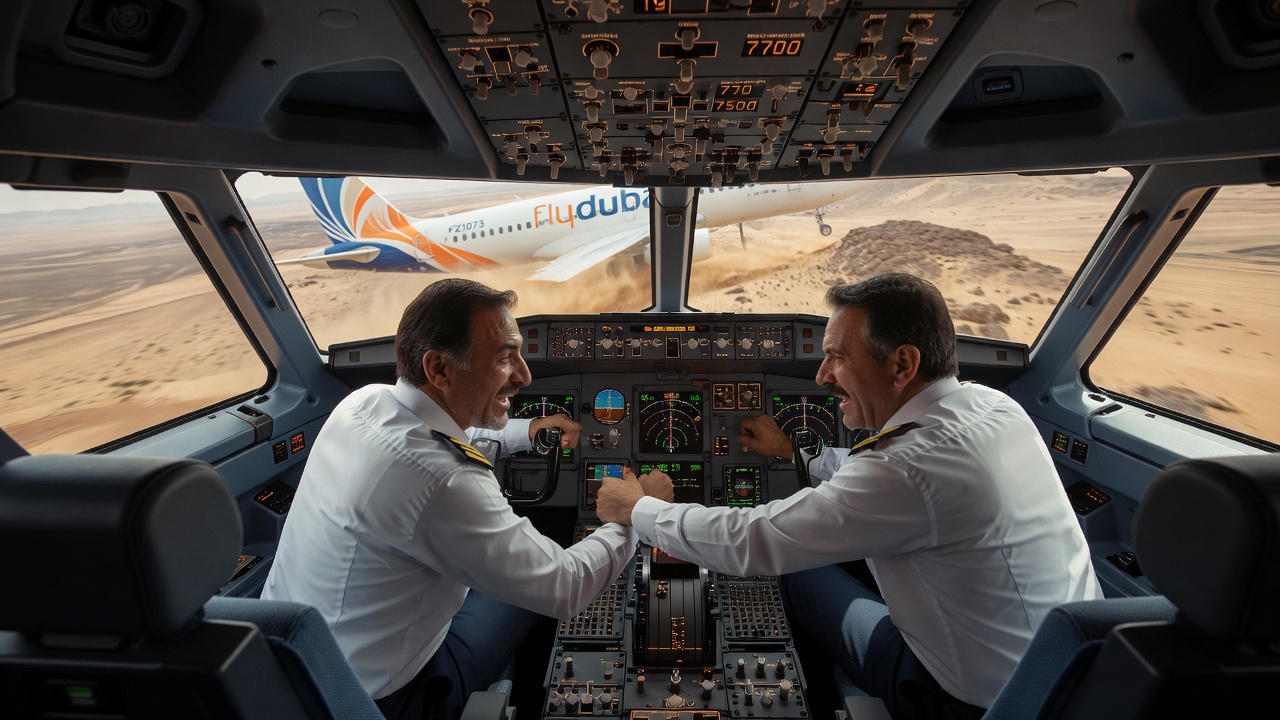
A Flydubai flight from Dubai to Tel Aviv was forced into an emergency diversion after a co-pilot attacked the aircraft's captain and attempted to seize control mid-flight. Flight FZ1073 descended roughly 14,000 feet and transmitted both the 7700 and 7500 distress codes before crew members and passengers managed to restrain the assailant, allowing the plane to land safely in Tabuk, Saudi Arabia. The incident, involving Captain Smit Majahar, raises immediate questions about cockpit security protocols and crew psychological screening across commercial aviation.
What the Distress Codes Signal
The transponder codes broadcast during the flight carry distinct meanings for air traffic controllers worldwide. Code 7700 indicates a general emergency, alerting ground control that the aircraft requires priority handling and immediate assistance. Code 7500, by contrast, is reserved specifically for unlawful interference - hijacking or an attempt to seize control of an aircraft. The simultaneous use of both codes suggests the crew was managing a dual crisis: a medical or safety emergency compounded by an active threat from within the cockpit itself. This combination is exceedingly rare and points to a situation that evolved rapidly, forcing split-second judgment calls from the flight crew.
Cockpit Security After Decades of Reform
Commercial aviation rebuilt cockpit access protocols after the September 11 attacks, introducing reinforced doors, strict two-person cockpit rules on many carriers, and rigorous psychological vetting for pilots. Yet incidents involving crew members themselves - rather than external hijackers - expose a different category of risk, one that hardened doors cannot fully address. Airlines and regulators have long debated how to balance pilot privacy with the need to monitor mental fitness over a career, particularly given the isolation and fatigue inherent in long-haul flying. This case will likely reignite scrutiny of how airlines assess psychological stability, not just at hiring but throughout a pilot's tenure.
Passenger Intervention and Crew Training
That passengers and cabin crew were able to restrain the co-pilot before further harm occurred underscores the value of emergency response training extending beyond the flight deck. Modern crew training includes scenarios for incapacitated or compromised pilots, though actual physical intervention by passengers remains an extraordinary, last-resort measure rather than a standard protocol. Investigators will almost certainly examine cockpit voice and flight data recordings to reconstruct the sequence of events, including what triggered the confrontation and whether warning signs were missed beforehand.
Regulatory and Industry Implications
Incidents of this nature typically trigger review by multiple aviation authorities, given the flight's international routing between the UAE and Israel with an unscheduled landing in Saudi airspace. Expect coordinated investigation involving the UAE's General Civil Aviation Authority, Saudi authorities, and potentially international bodies such as ICAO, which sets global standards for aviation safety reporting. Airlines operating in geopolitically sensitive corridors already face layered security considerations; this event adds pressure to revisit internal crew monitoring systems, mental health support structures, and emergency protocols for threats originating inside the cockpit rather than from external actors.