
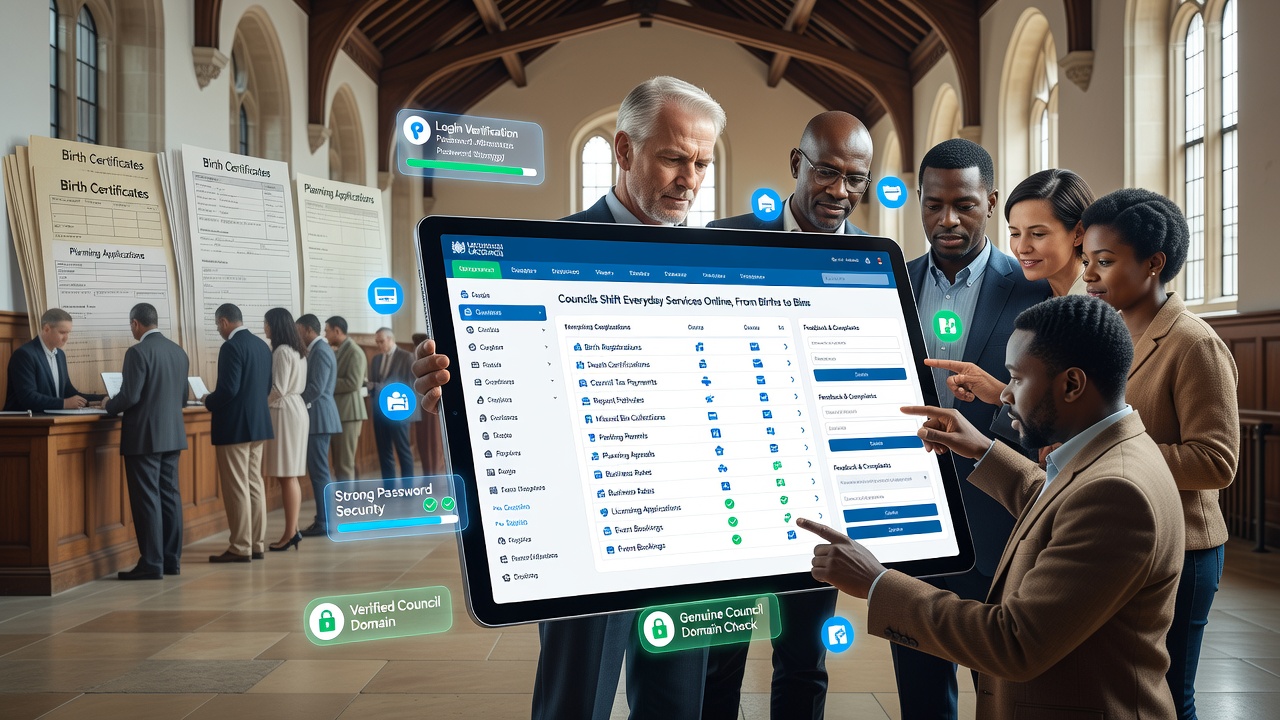
Local authorities across the country are consolidating a wide range of civic transactions into single digital portals, letting residents register deaths, pay council tax, report potholes or apply for parking permits without visiting an office or waiting on the phone. The shift reflects a broader pattern in public administration: councils under budget pressure are pushing routine, high-volume transactions toward self-service platforms, reserving staff time for cases that genuinely require human judgment.
Why Councils Are Centralizing These Services
The range of services listed - from registering a birth to appealing a planning decision - spans departments that historically operated with separate systems, forms and queues. Bringing them under one digital front door reduces duplication and gives residents a predictable way to find what they need. For councils, it also means fewer phone calls and paper forms to process manually, which matters when administrative budgets are tight and demand for services keeps rising.
This is not unique to any single authority. Local government bodies nationwide have been migrating toward unified online portals for a decade, driven by cost pressures, resident expectations shaped by banking and retail apps, and central government encouragement to digitize public services.
What This Means for Residents
Self-service does not remove the need for human contact entirely. Some processes - such as a death registration or an adult safeguarding referral - still require sensitivity and, often, an appointment or follow-up call. Digital forms in these cases function as an entry point rather than a complete substitute for personal interaction. Other services, such as reporting a missed bin collection or requesting a parking permit, are genuinely transactional and suit automation well.
Residents should be aware that account-based systems, such as those for viewing a council tax or benefits account online, require creating a login and verifying identity. This introduces the same considerations that apply to any online account: using strong passwords, checking that the portal is the genuine council domain, and understanding what personal data is being stored and for how long.
Business and Compliance Implications
For local businesses, the move to online business rates accounts, licensing applications and event bookings changes how compliance deadlines are tracked. Missing a notification because it arrived by email rather than post is a real risk during the transition period, particularly for smaller operators without dedicated administrative staff. Taxi and private hire licensing, food business registration and second-hand goods licensing are regulated activities where delays or errors in reporting a change of circumstance can have legal consequences, so businesses need to treat these portals with the same diligence as paper-based compliance.
Accountability and Feedback Channels
The inclusion of a dedicated route for comments, complaints and suggestions is a necessary counterweight to automation. When services move online, the risk is that errors - a missed appeal deadline, a miscalculated benefit, a wrongly rejected planning application - become harder to contest if there is no clear human escalation path. Separate complaint forms for specific services suggest councils recognize that a single generic feedback box cannot handle the range of issues that arise, from a disputed parking ticket to a serious safeguarding concern.
As more civic functions migrate online, the test for these platforms will be whether they genuinely reduce friction for residents or simply relocate it, trading phone queues for login problems and form confusion. Transparency about data handling, clear routes back to a human when needed, and consistent service standards across departments will determine whether the shift delivers the efficiency councils are aiming for.