
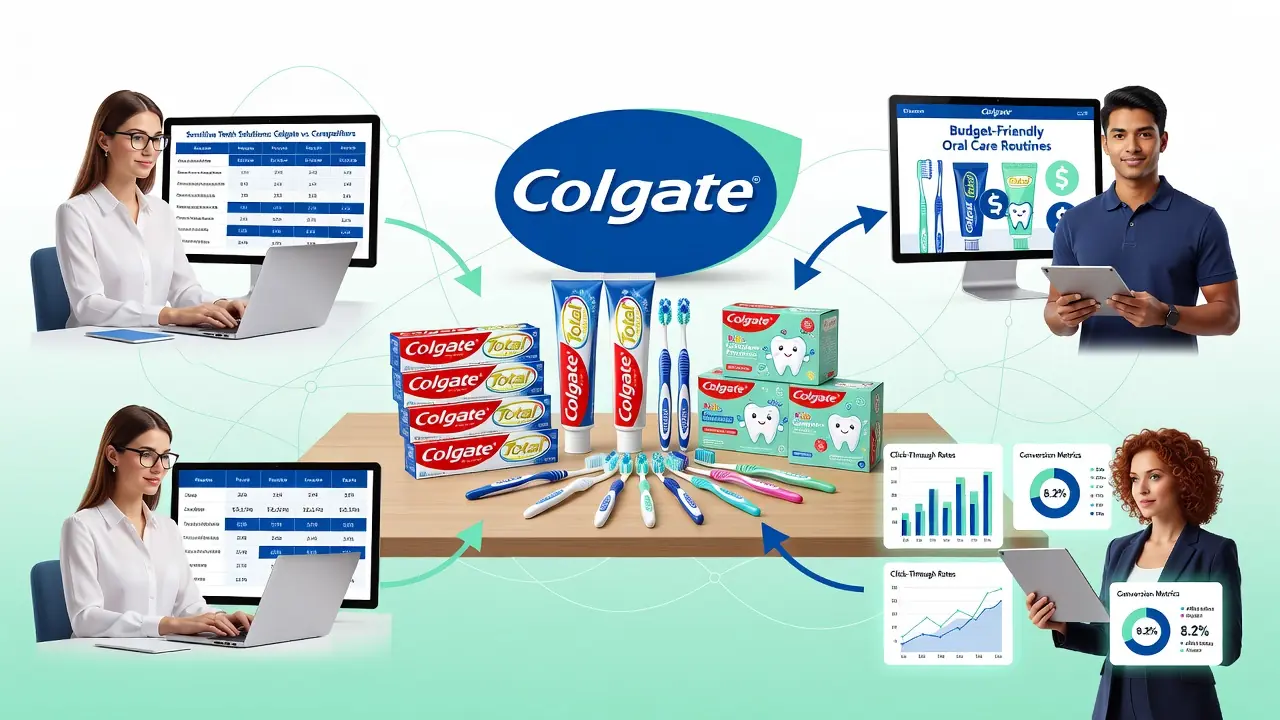
Affiliate marketing has become a standard business channel for household consumer brands, and oral care is no exception. Colgate's affiliate program, known as Colgate Preferred, illustrates how a legacy manufacturer translates decades of brand recognition into a performance-based partnership model with independent content creators, bloggers, and publishers.
What the Colgate Preferred Program Actually Offers
At its core, the program follows a familiar affiliate structure: a publisher applies, gets approved, receives a unique tracking link, and earns a commission when a referred visitor completes a purchase. Colgate Preferred pays a flat 3% commission per sale, a rate consistent with many consumer packaged goods affiliate programs, which typically sit lower than commissions in software or financial services because of thinner retail margins and high purchase frequency. The appeal lies less in the percentage and more in the brand's broad product catalogue and consistent consumer demand, since oral hygiene products are recurring purchases rather than one-off transactions.
Why Commission Structure and Cookie Duration Matter
Two mechanics shape how much an affiliate can realistically earn: the commission rate and the cookie duration, which determines how long after a click a sale can still be attributed to the referring publisher. A longer cookie window increases the chance that a reader who clicks today but buys next week still generates a commission. For publishers in the hygiene and dental content space, this matters because purchase decisions for toothpaste or toothbrushes are rarely impulsive; readers often research before buying, so attribution windows directly affect earnings potential.
It is also standard practice across affiliate programs, including this one, for commissions to be reversed if an order is later cancelled, returned, or disputed. Publishers should treat this as normal program governance rather than a red flag, though it reinforces why diversifying income across several affiliate relationships is a more stable approach than depending on a single brand partnership.
Content Strategy Over Link Placement
Simply inserting a tracking link into a blog post rarely produces meaningful revenue. Performance in affiliate marketing correlates strongly with content quality and relevance. Publishers who understand their audience's actual concerns, whether that is sensitive teeth, children's oral care, or budget-friendly routines, and who demonstrate direct, verifiable experience with the products tend to convert better than those publishing generic reviews. Comparison tables, clear calls to action, and transparent disclosure of the affiliate relationship all contribute to reader trust, which remains the real currency in this business model.
Data, Transparency, and Realistic Expectations
Serious affiliate publishers increasingly rely on analytics tools to track click-through rates, conversion performance, and earnings across multiple programs simultaneously, rather than relying solely on the reporting dashboard provided by a single brand. This allows publishers to identify which content formats and topics actually drive sales and to reallocate effort accordingly.
It is worth keeping expectations grounded. A 3% commission on everyday retail goods means meaningful income requires significant, consistent traffic and genuine audience trust, not a handful of scattered links. Affiliate marketing in this category functions as a long-term content business rather than a quick revenue shortcut, and sustainable success depends on owning a dedicated platform, such as a blog, rather than relying exclusively on social channels where attribution and audience retention are harder to control.