
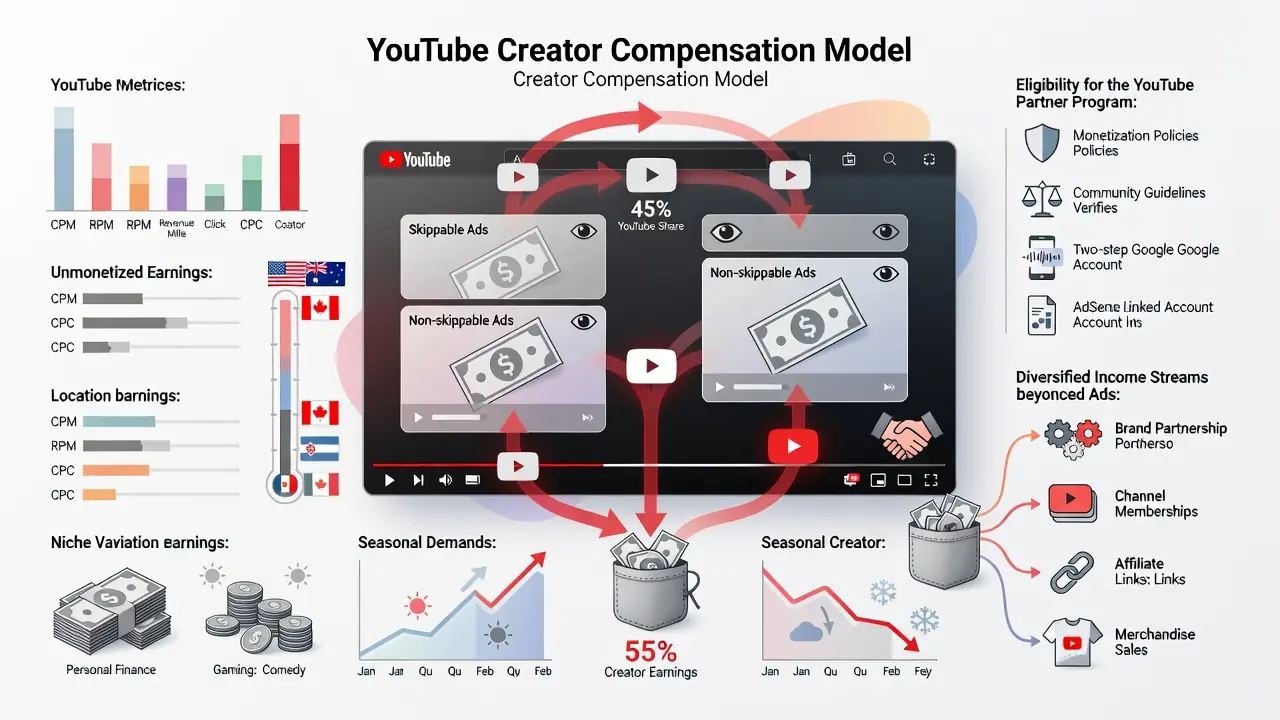
Most people assume YouTube pays creators for every pair of eyes that lands on a video. That assumption is wrong, and the gap between perception and mechanics explains why so many new creators misjudge their earning potential. YouTube's payment system is built around advertising exposure, not raw viewership, and understanding that distinction matters for anyone treating the platform as a business.
The mechanics behind the payout
A video can rack up a million views and generate nothing if no ads ever run against it. Conversely, a video with modest traffic but strong ad delivery can outperform expectations. YouTube's revenue model splits advertising income between the platform and the creator, with YouTube retaining 45% and the creator keeping 55%. That split only applies to ad views, the number of times an advertisement attached to a video is actually watched or served, not the view count displayed under the video title.
This structure exists because YouTube's actual customer in this transaction is the advertiser, not the viewer. Advertisers pay for exposure to audiences, and YouTube passes along a share of that payment to the creator who supplied the audience. Views without ads simply don't generate revenue, because there's no transaction taking place.
Why CPM, RPM, and CPC cause confusion
Creators often compare notes using CPM (cost per mille), the amount an advertiser pays per thousand ad impressions. But CPM reflects advertiser spend, not creator income. RPM, or revenue per mille, is the figure that matters to a creator's bank account, since it already accounts for YouTube's cut and for the portion of views that never carried an ad at all. A channel reporting a $12 CPM is not reporting $12 in earnings per thousand views; the real number after YouTube's share and unmonetized traffic is typically lower. CPC, cost per click, applies specifically when a viewer clicks an ad, and it pays out at a higher rate than a simple ad view.
Mixing these terms up is one of the most common sources of disappointment among new creators who expect a payout that never materializes.
What shapes earnings per view
Industry estimates place typical YouTube ad earnings somewhere between $5 and $15 per thousand ad views, though this figure is not an official rate published by YouTube and fluctuates with several variables:
- Content niche, since advertiser demand varies sharply by category
- Audience location, with countries like Australia, the United States, and Canada commanding higher advertiser rates
- Ad type and placement, including whether an ad is skippable
- Video length and watch time, which affect how many ad slots can run
- Seasonal demand, which typically peaks in the fourth quarter and softens in January and February
- The share of viewers using YouTube Premium, who don't see ads at all
Niches tied to financial decision-making, such as personal finance or making money online, tend to draw the highest advertiser spend, while categories like gaming or comedy sit at the lower end. None of this is a formula for guaranteed income; it's a reflection of how advertiser budgets are allocated across audience segments.
Eligibility, oversight, and the limits of ad revenue
Earning anything at all requires joining the YouTube Partner Program, which comes with conditions: compliance with monetization policies, adherence to Community Guidelines, two-step verification on the associated Google Account, and a linked AdSense account. Channel strikes or policy violations can disqualify a creator regardless of view count, which keeps a degree of accountability built into the system.
Ad revenue also represents only one slice of what sustains full-time creators. Brand partnerships, channel memberships, affiliate links, and merchandise sales often account for a larger share of total income than advertising alone, particularly once a channel has built a steady audience. Treating ad revenue as the sole or guaranteed path to a living wage misreads how the platform's economics actually work.