
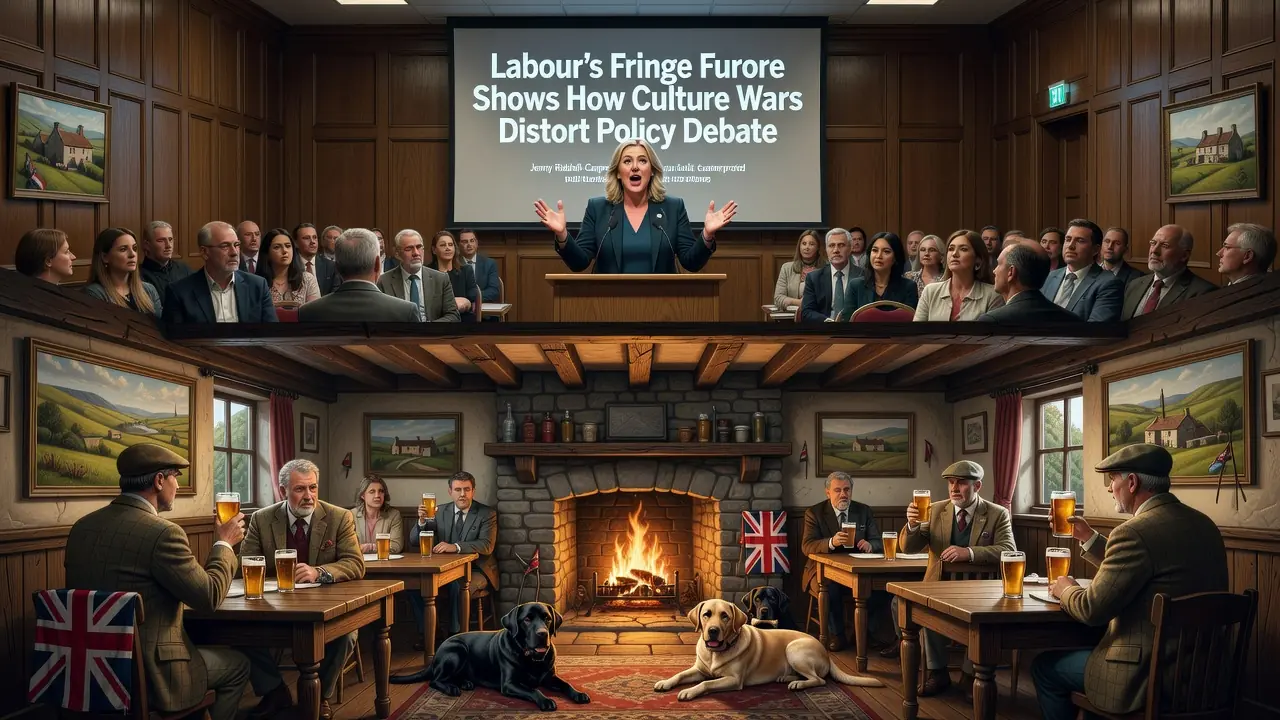
A junior minister's offhand remark about labradors and country pubs has become the latest reminder of how easily fringe conference commentary curdles into a national talking point. Jenny Riddell-Carpenter's suggestion that a romanticised image of rural Britain carries "far right" undertones was never going to pass without comment, and it hasn't. The episode says less about nature policy than it does about the current appetite for turning ordinary cultural symbols into ideological battlegrounds.
When Culture Becomes the Argument
Party conference season has long been a breeding ground for remarks that outlive their context. Fringe events, by design, are looser and less scripted than the main hall, which is precisely why they generate headlines. The pattern is familiar: a politician reaches for a provocative frame, the comment escapes its original audience, and commentators across the spectrum pile in. What's notable here is the subject matter. Pubs, ale and dogs are about as mainstream as British life gets, which makes the attempt to code them as politically suspect feel especially strained, and easy to mock regardless of one's own politics.
Private Members' Clubs and the Search for Novelty
Away from Westminster, London's private members' club scene is chasing distinction through ever more specialised staffing, with reports of a dedicated butter sommelier at a new Belgravia opening sitting alongside wine and cigar specialists at established addresses. This is a business response to market saturation. When a sector becomes crowded, operators look for differentiators, however niche, to justify premium pricing and membership fees. Whether a butter specialist meaningfully improves a dining experience is a separate question from whether it generates press coverage and a sense of exclusivity, which is often the more immediate commercial goal.
The broader context matters too. High-net-worth residents have been reassessing their UK footprint amid changes to the tax treatment of non-domiciled status, and clubs competing for a shrinking pool of wealthy members face real commercial pressure. Novelty hires are a visible, low-cost way to signal investment and ambition, even if their practical impact on retention is unproven.
Organised Crime in Unexpected Places
Perhaps the most consumer-relevant detail here concerns reports that some tourist-facing ice cream vans on Westminster Bridge are linked to organised crime, charging prices far above the national average. This fits a wider pattern regulators and trading standards bodies have flagged for years: cash-heavy, low-scrutiny retail operations in high-footfall tourist areas can be attractive fronts for illicit activity, precisely because pricing is opaque and transactions are hard to trace. It is a reminder that consumer protection issues are not confined to online platforms or financial products; they show up on street corners too, wherever oversight is thin and footfall is high.
Why These Stories Share a Thread
What links a ministerial gaffe, an eccentric hiring decision and a bridge-side ice cream racket is a common dynamic: institutions and individuals performing distinction, whether ideological, culinary or commercial, in ways that invite scrutiny once exposed to daylight. Readers are right to treat each with a measure of scepticism, not cynicism. The louder the claim to significance, the more it tends to collapse under ordinary common sense.